
Study in USA from India | MS, MBA & UG Admissions
Our graduate programs go beyond mainstream thought and practices, fostering intellectual inquiry and creative mastery.
The USA is the #1 destination for indian students – hosting over 330,000 Indian scholars annually, more than any other nationality. At Successcribe, our USA admissions specialists in Gurgaon have helped hundreds of students secure MS, MBA, and undergraduate admissions at top American universities, including MIT, Stanford, Cornell, University of Michigan, Georgia Tech, and more. Whether you’re targeting an MS in Computer Science, an elite business school, or a funded PhD, we guide you from GRE or GMAT preparation and university shortlisting all the way through your F-1 visa – completely free of charge.
Why Study in the USA?
The USA hosts 48 of the world’s top 100 universities and remains the gold standard for higher education, particularly in STEM fields. Here is why Indian students consistently choose the United States:
- World’s Top Universities: Home to MIT, Stanford, Harvard, Caltech, and 15 of the global top 20 institutions.
- STEM OPT Extension: MS and PhD graduates in STEM fields can work in the USA for up to 3 years on OPT (12 months standard + 24-month STEM extension) without needing immediate H-1B sponsorship.
- Funded MS & PhD Programs: Many PhD tracks and selective MS programs offer full funding, including complete tuition waivers and a living stipend ranging from $18,000 to $35,000 per year.
- Robust Job Market: The average starting salary for Indian MS graduates ranges from $85,000 to $110,000 in technology, engineering, and data science roles.
- H-1B Visa Pathway: Indian nationals receive the largest share of H-1B visas annually, creating a strong established pipeline from study to work.
- Thriving Diaspora: Over 4.4 million Indian-Americans live in the US, offering unmatched professional networking hubs in Silicon Valley, New York, and Texas.
- Flexible Curriculum: Academic structures allow you to choose your own courses, change majors, or double-major with far more freedom than European systems.
Book a Free USA Counselling Session Today!
Get expert guidance on universities, F-1 Visa, OPT & Green Card pathways for the USA — completely free!
📞 Call us at +91 99712 79518
Types of Universities
| Top Notch | Lesser Known | Top Notch |
| • Brown University | • University of California System | • Stanford University |
| • Columbia University | • University of Texas System | • Massachusetts Institute of Technology (MIT) |
| • Cornell University | • University of Florida | • California Institute of Technology (Caltech) |
| • Dartmouth College | • University of Michigan | • New York University |
| • Harvard University | • University of North Carolina System | • Northwestern University |
| • University of Pennsylvania | • University of Illinois System | • Duke University |
| • Princeton University | • University of Wisconsin System | • Johns Hopkins University |
| • Yale University | • Ohio State University | • Brown University |
Programs You Can Study in the USA
MS in USA (Master of Science – 1.5 to 2 Years)
The most popular academic route for Indian engineering and tech graduates. Top programs include:
- MS Computer Science: MIT, Stanford, CMU, UIUC, University of Michigan, Georgia Tech
- MS Data Science & AI: NYU, Columbia, Carnegie Mellon, UC San Diego
- MS Electrical Engineering: Purdue, Texas A&M, USC, University of Washington
- MS Mechanical Engineering: Georgia Tech, University of Michigan, Penn State
- MS Finance & Financial Engineering: Columbia, NYU Stern, MIT Sloan
- MS Cyber Security: CMU, Georgia Tech, Purdue, Johns Hopkins
Most MS programs in STEM qualify for the 24-month STEM OPT extension, giving you up to 3 years of US work authorization.
MBA in USA (1.5 to 2 Years)
US MBA programs are globally regarded as the most prestigious business credentials. Top schools and profiles include:
- Harvard Business School: Case method, leadership focus; target GMAT Focus Edition 675+
- Wharton (UPenn): Finance and strategy powerhouse; target GMAT Focus Edition 685+
- Booth (Chicago): Quantitative, data-driven methodology; target GMAT Focus Edition 675+
- Kellogg (Northwestern): Marketing and peer teamwork culture; target GMAT Focus Edition 665+
- MIT Sloan: Technology, entrepreneurship, and innovation focus; target GMAT Focus Edition 665+
- Ross (Michigan), Fuqua (Duke), Darden (UVA): Incredible ROI and highly receptive to Indian applicants.
Most top-tier US MBAs require 3–5 years of quality work experience, competitive test scores, and strong essays. Successcribe provides end-to-end MBA application packaging.
Undergraduate (Bachelor’s) in USA (4 Years)
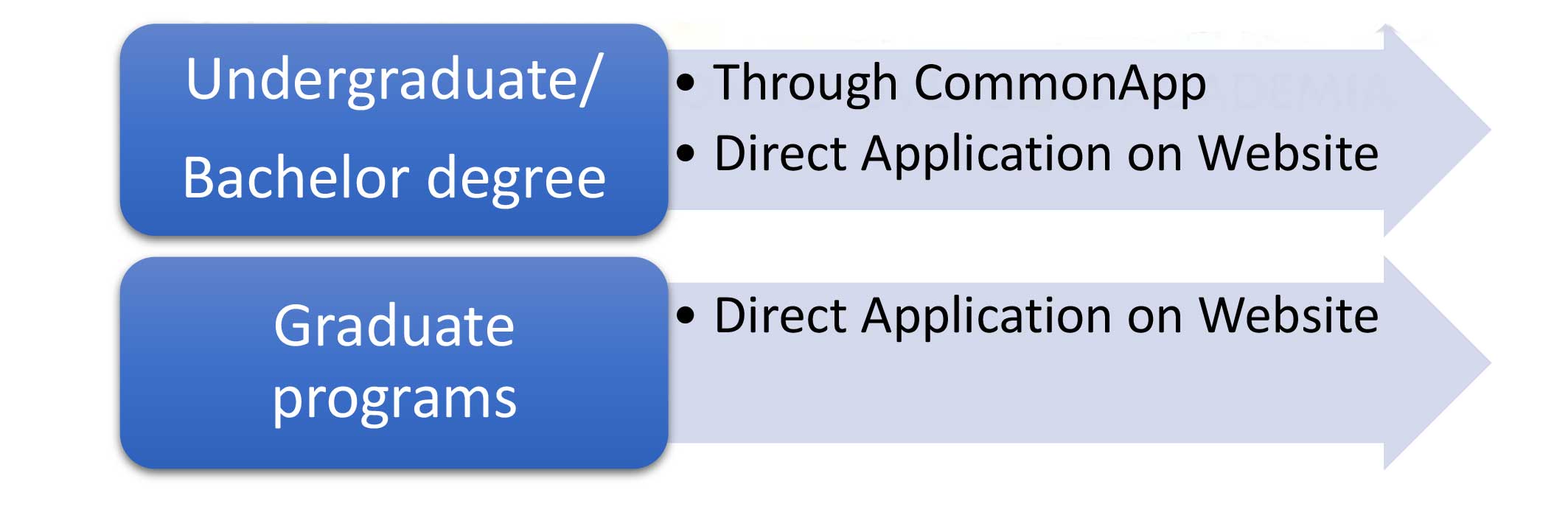
US undergraduate programs span 4 years and offer unrivaled curricular flexibility. Applications are centrally processed through the Common App.
- Key Requirements: Class 12 board marks, SAT/ACT scores, personal essays, and a holistic extracurricular profile.
- Competition: Elite universities (Ivy League, MIT, Stanford) are highly competitive for international applicants, with acceptance rates frequently falling below 5%.
PhD Programs in USA (4 – 6 Years, Fully Funded)
US PhD programs are typically fully funded by the host institution. The university waives full tuition costs and provides a monthly stipend ($18,000–$35,000/year) in exchange for research (RA) or teaching (TA) assistance. This makes a US PhD one of the most financially viable options for Indian researchers.
- Requirements: Strong foundational research background, competitive GRE scores, a compelling Statement of Purpose (SOP), and 2–3 academic recommendation letters.
OPT & STEM OPT – What Indian Students Need to Know
Optional Practical Training (OPT) allows F-1 visa students to work legally in the USA after graduation. STEM program graduates qualify for an additional 24-month extension, yielding a total of 3 years of work authorization.
| Program Type | OPT Duration | STEM Extension | Total US Work Auth |
| Non-STEM MS / MBA | 12 months | Not eligible | 12 months |
| STEM MS (CS, Engineering, Data Science, etc.) | 12 months | 24 months | 36 months (3 years) |
| PhD (STEM) | 12 months | 24 months | 36 months (3 years) |
| Undergraduate (Non-STEM) | 12 months | Not eligible | 12 months |
| Undergraduate (STEM) | 12 months | 24 months | 36 months (3 years) |
During your STEM OPT period, your employer must be registered in the federal E-Verify system. Many Indian students strategically leverage this 3-year window to secure corporate H-1B sponsorship.
What is STEM
| STEM | Non-STEM |
Definition & Core Focus: STEM stands for Science, Technology, Engineering, and Mathematics. These fields are associated with a strong emphasis on analytical and technical skills. | Definition & Core Focus: Non-STEM fields generally focus on a broader range of skills, including critical thinking, communication, and creativity. |
Disciplines & Career Roles: • Science: Biology, chemistry, physics, and environmental science. • Technology: Computer science, information technology, and telecommunications. • Engineering: Civil, mechanical, electrical, and aerospace engineering. • Mathematics: Pure and applied mathematics, statistics, and related fields. • Common Roles: Software developers, engineers, scientists, mathematicians, and IT professionals. | Disciplines & Career Roles: • Humanities: Literature, philosophy, history, linguistics, and cultural studies. • Social Sciences: Sociology, psychology, economics, political science, and anthropology. • Arts: Fine arts, performing arts, graphic design, and other creative disciplines. • Business & Management: Business administration, marketing, finance, and management. • Common Roles: Writers, artists, historians, psychologists, and business managers. |
US Market Context: • The US is a global leader in STEM research and innovation. • Home to many of the world’s top universities and research institutions, such as MIT, Stanford, and Caltech. • A strong culture of entrepreneurship and venture capital, which has led to the creation of many successful tech companies. • STEM jobs are typically high-paying and in demand, making it a lucrative career path for many Americans. | US Market Context: • The US also has a strong non-STEM sector, which includes fields such as business, healthcare, education, and the arts. • These fields are also important to the US economy and provide many Americans with good jobs and opportunities. • Non-STEM jobs can be just as rewarding as STEM jobs, and they offer a wider variety of career paths to choose from. |
How is it Important?
STEM and non-STEM fields both play crucial roles in society, contributing to various aspects of human development, progress, and well-being.
| Core Metric | STEM | Non-STEM |
| Primary Impact | Innovation and Technological Advancement: • STEM fields drive innovation and technological progress, leading to the development of new products, services, and solutions. • Breakthroughs in science and technology have a profound impact on various industries, improving efficiency and quality of life. | Cultural and Artistic Enrichment: • Non-STEM fields, including the humanities and arts, contribute to cultural enrichment and the understanding of human experiences. • Literature, art, and philosophy provide insights into diverse perspectives and contribute to a well-rounded education. |
| Economic Impact | Economic Growth: • STEM industries contribute significantly to economic growth by creating jobs, fostering entrepreneurship, and driving productivity. • Countries with strong STEM sectors are often more competitive in the global economy. | Economic Growth: • Non-STEM industries [Note: Original graphic contains a typo here where it textually duplicates the STEM point] contribute significantly to economic growth by creating jobs, fostering entrepreneurship, and driving productivity. Countries with strong sectors are often more competitive in the global economy. |
| Skill Focus | Problem Solving and Critical Thinking: • STEM education emphasizes problem-solving skills and critical thinking, which are essential for addressing complex challenges in various domains. • Scientific and engineering approaches help find evidence-based solutions to societal issues. | Communication and Collaboration: • Non-STEM fields often emphasize strong communication, critical thinking, and interpersonal skills. • Effective communication is essential in all professional settings and is particularly emphasized in fields such as journalism, public relations, and communication studies. |
| Global Context | Global Challenges: • STEM plays a crucial role in addressing global challenges such as climate change, healthcare, energy, and food security. • Scientific research and technological advancements are key to finding sustainable solutions to these challenges. | Global Challenges: • Non-STEM plays a crucial role in addressing global challenges [Note: Text duplicated from STEM column in the original graphic] such as climate change, healthcare, energy, and food security. Scientific research and technological advancements are key to finding sustainable solutions to these challenges. |
Eligibility & Requirements for Indian Students
| Requirement | MS / PhD | MBA | Undergraduate (UG) |
| Academic Qualification | B.Tech/B.E./B.Sc. (Min 60–65%) | Bachelor’s in any stream (Min 60%) | Class 12 (Min 75–85% for top tiers) |
| Standardized Test | GRE (Target 315+ for top schools) | GMAT Focus (Target 625+ for Top 20) | SAT (1400+ for top schools) or ACT |
| English Proficiency | TOEFL 100+ or IELTS 7.0+ | TOEFL 100+ or IELTS 7.0+ | TOEFL 90+ or IELTS 6.5+ |
| Work Experience | Not required (but adds value) | 3–5 years strictly required | Not required |
| SOP / Essays | Statement of Purpose (800–1200 words) | Multiple essays (Goals, Leadership) | Common App Essays (650 words) |
| Recommendations | 2–3 academic or professional LORs | 2–3 professional LORs preferred | 1–2 academic LORs + School Counselor |
| Application Portal | University website (Direct) | University website (Direct) | commonapp.org or Coalition App |
Cost of Studying in the USA
| Program | Tuition (per year) | Living Costs (per year) | Total Est. Cost (per year) | Funded Options? |
| MS (Public University) | $15,000–$35,000 | $12,000–$18,000 | $27,000–$53,000 | RA/TA funding available |
| MS (Private University) | $35,000–$60,000 | $15,000–$25,000 | $50,000–$85,000 | Limited fellowships |
| MBA (Top 20) | $65,000–$80,000 | $20,000–$30,000 | $85,000–$110,000 | Merit scholarships |
| Undergraduate | $20,000–$55,000 | $12,000–$20,000 | $32,000–$75,000 | Need-based aid available |
| PhD (Funded) | $0 (Waived) | Stipend: $18,000–$35,000 | Net cost: $0–$5,000 | Fully funded (most programs) |
Based on the current exchange rate of 1 USD ≈ ₹84, premier Indian banking institutions – including SBI, Axis Bank, Credila, and Avanse – provide customized education loans up to ₹1.5 crore for USA studies without collateral for select universities. Successcribe directly connects you with our trusted loan partners.
USA University Intakes & Application Timeline
| Intake | Start Month | Application Deadline | Best For | Recommended Apply By |
| Fall (Main Intake) | August–September | December–February | MS, MBA, UG, PhD — All programs | Start applications 12 months before |
| Spring | January–February | September–October | MS only (Limited universities) | Start applications 8 months before |
| Summer | May–June | February–March | Short courses / Language programs | Not recommended for degree tracks |
F-1 Student Visa – Complete Process for Indian Students
The F-1 Student Visa is the mandatory non-immigrant visa for full-time academic study in the United States. Here is the exact step-by-step processing pathway:
- Step 1 – Receive your I-20 Form: Once you clear your tuition deposit and confirm your enrollment, your university issues an official I-20 document. This is your foundation certificate of eligibility.
- Step 2 – Pay the SEVIS Fee: Pay the mandatory SEVIS I-901 fee of $350 at fmjfee.com before booking your official consular appointments.
- Step 3 – Complete the DS-160 Form: Fill out the US Visa Application form (DS-160) online at ceac.state.gov. Ensure information matches your passport and I-20 perfectly.
- Step 4 – Schedule Your Visa Interview: Book your two-part appointment (Biometrics + Visa Interview) at the nearest US Embassy/Consulate (New Delhi, Mumbai, Chennai, Hyderabad, or Kolkata). Peak wait times can stretch from 2–8 weeks – book early.
- Step 5 – Attend the Visa Interview: Arrive with your physical I-20, DS-160 confirmation page, SEVIS receipt, passport, academic transcripts, and clear financial proof. The interview itself typically lasts 3–5 minutes.
- Step 6 – Visa Decision: Decisions are communicated on the spot. Approved passports are safely stamped and returned via chosen premium courier channels within 3–5 business days.
Scholarships for Indian Students to Study in USA
| Scholarship | Type | Value | Eligibility | Deadline |
| Fulbright-Nehru Fellowship | Government | Full tuition + living + flights | Masters/PhD, Indian citizens, stellar academics | July each year |
| Hubert Humphrey Fellowship | Government | Full program cost coverage | Mid-career professionals, non-degree tracks | October each year |
| AAUW International Fellowship | Non-Govt | $18,000–$30,000 | Female international scholars, grad/postgrad | November each year |
| #YouAreWelcomeHere | Non-Govt | Varies by host institution | International students, all disciplines | Varies |
| University Merit Scholarships | University | $5,000–$25,000 / year | Based on GRE/GMAT scores + GPA | Parallel to admission |
| RA/TA Funding (MS/PhD) | University | Full tuition waiver + Stipend | Research/teaching roles; primarily STEM PhD | Parallel to admission |
| Inlaks Shivdasani Foundation | Non-Govt | Up to $100,000 | Indian students under 30, elite institutions | April each year |
APPLICATION PROCEDURE IN USA
FAQs
What GRE score do I need for an MS in the USA?
For top-ranked MS programs (like MIT, Stanford, or CMU), you should aim for a GRE score of 325+ with a Quant score of 167+. For mid-tier institutions ranked 50–100, a score between 310 and 318 is generally sufficient. Quant scores carry the most weight for STEM programs.
What is STEM OPT and how does it benefit Indian students?
STEM OPT is a 24-month work extension granted to international graduates of science, technology, engineering, and math programs. Paired with the standard 12-month OPT, it gives you a total of 3 years to work in the US. This gives Indian students three chances to enter the annual H-1B visa lottery, significantly improving long-term employment prospects.
How much does it cost to study MS in the USA for Indian students?
At public universities, tuition ranges from $15,000 to $35,000 per year, with living expenses adding another $12,000 to $18,000. This brings the estimated total annual cost to $27,000–$53,000 (approximately ₹23–45 lakhs). Private universities are more expensive, ranging from $50,000 to $85,000 annually. To help cover these costs, major Indian banks offer collateral-free education loans up to ₹1.5 crore for select US institutions.
How long does the F-1 visa process take in India?
F-1 visa interview wait times at US Consulates in India generally run between 2 and 8 weeks, peaking during the busy March-to-July season. Once your interview is complete and approved, your passport is typically stamped and returned via courier within 3 to 5 business days. Successcribe recommends booking your interview appointment at least 2 months prior to your program's start date.
What is the difference between an I-20 and an F-1 visa?
The I-20 is an official document issued directly by your accepted US university that confirms your academic enrollment and financial capacity; it is not a travel document. The F-1 is the actual visa stamp placed inside your passport by the US Consulate. You must have a valid I-20 to apply for your F-1 visa, and you must have both to legally enter the United States.
POPULAR COMPANIES IN USA








How to Apply?
- You Apply
Tell us a little about yourself and we’ll help with the rest. Our convenient online application tool only takes 10 minutes to complete.
- We Connect
After you submit your application, an admissions representative will contact you and will help you to complete the process.
- You Get Ready
Once you’ve completed your application and connected with an admissions representative, you’re ready to create your schedule.